Where passion meets planning: How Pinterest powers decisive travel bookings
13 October 2025
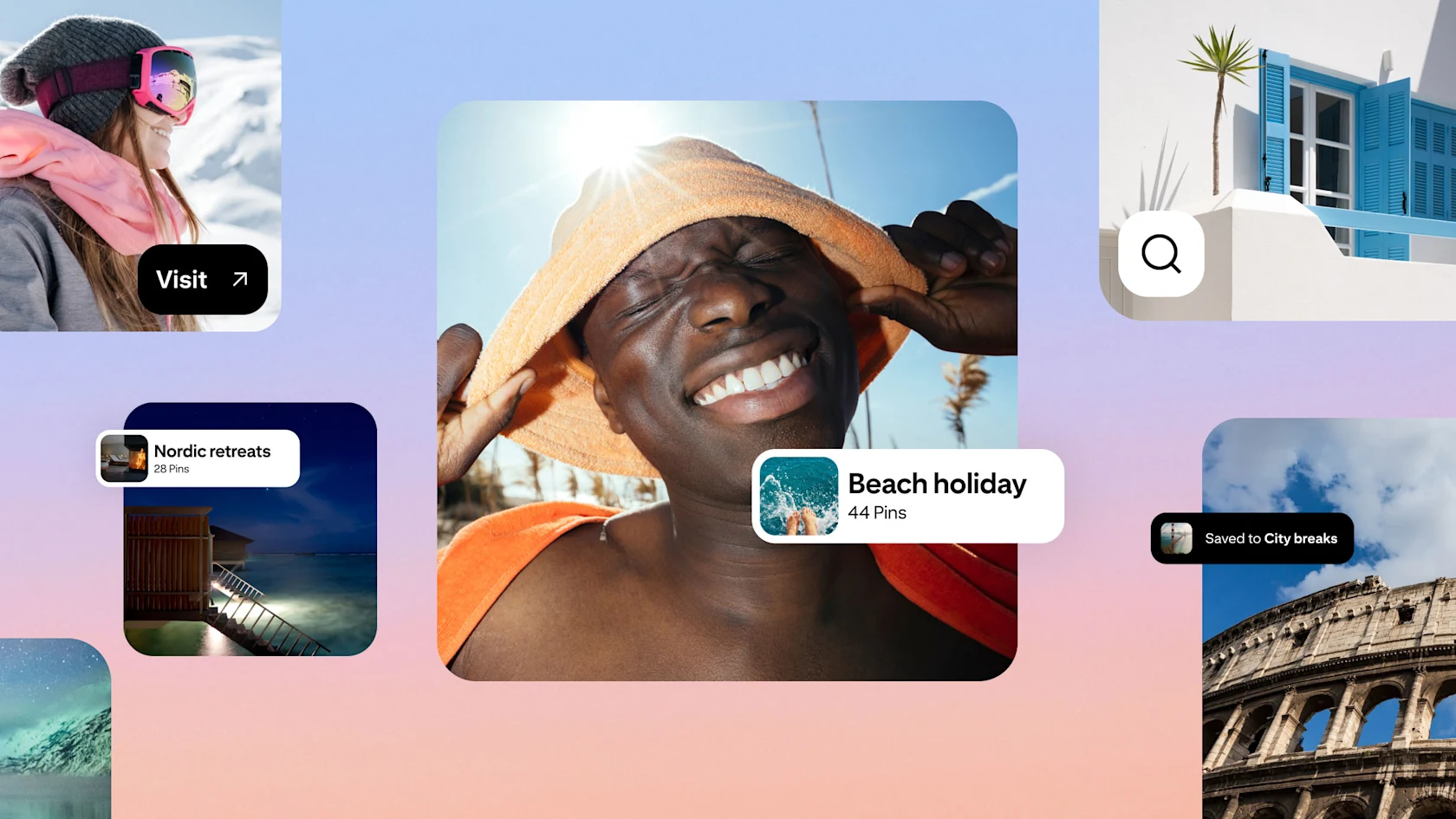
Travellers aren’t booking on impulse—they’re booking on inspiration. Is your brand part of the journey, or just another tab left behind?
Booking a dream holiday should be easy. It isn’t. Travellers visit up to 277 pages before booking a flight, and 58% say the sheer volume of options is overwhelming.1 In a sea of similar deals, even great brands risk becoming just another forgotten tab.
Whether they’ve been planning for months or dreaming up a last-minute escape, people want more than the lowest price. They want inspiration that feels personal, not just offers that fill the feed. The brands that win are those that connect with real passion points, meeting travellers where the journey begins and making the next step effortless.
That’s where Pinterest comes in. Here’s how to show up early, reduce the noise and be the brand travellers remember when it’s time to book.
1. Shape the shortlist
The challenge: Airlines often over-index on last-minute deals but intent forms months earlier on curated boards, destination searches and “future trip” ideas. Miss that window and you’re forgotten by the time decisions are made.
Case in point: KLM used Premiere Spotlight to drive reach and discovery in the planning stages, then retargeted with fares and promos. Their campaign achieved +5.9% incremental Add to Cart2 and a 77% YoY improvement in Checkout CPA3—proving that early visibility can drive long-term performance.
Key takeaway: To become the place where travellers catch flights (and feelings for your brand), don’t be the deal they stumble on last. Be the airline that shapes the shortlist from the get-go.
“At KLM, we believe in capturing the essence of travel and delivering authentic experiences to our customers. Together with our creative and media partner, Dentsu, we created a campaign that connected with people who are making travel plans on Pinterest.”
Femke de Zeeuw, Director Marketing Communications & Brand Benelux, KLM
2. Sell the vibe first
The challenge: Hotels market rooms and points. But travellers choose mood and experience. Too often, brands miss the “vibe check” that happens well before dates and rates enter the picture.
Case in point: With lifestyle-led visuals built for Pinterest, Mercure showcased spa getaways and indulgent culinary escapes, capturing each destination’s vibe and reaching planners at peak consideration. The result: a 6.5x ROAS.4
Key takeaway: Sell the experience first, make sure vibes are immaculate, then make booking effortless. When your creative matches a traveller’s personality, you move from “just another hotel” to “the stay they saved.”
3. Curate, don’t commoditise
The challenge: Competing on price alone commoditises your brand. Travellers need curation and confidence to cut through choice overload.
Case in point: TUI owned the Q5 planning surge (the post-festive period) with a Premiere Spotlight takeover, bringing eye-catching creatives, festive messaging and timely inspiration to people’s feeds. With collections ads, they also highlighted their extensive product range and made browsing feel curated, tailored and not overwhelming.
Key takeaway: Tour operators and online travel agents (OTAs) that act like advisors—curating options at peak planning moments—power decisions instead of adding more noise.
Act on the insights
Across each of these categories, the pattern is clear: the brands that win show up first, earn trust and keep booking simple. Here’s how to follow suit.
Inspire early: Target passion-led searches (e.g. “solo wellness retreats”) with visually rich, aspirational creative. Use the Pinterest Trends tool to stay ahead of rising destinations and activities of interest.
Curate collections: Use collections ads to organise itineraries, themed stays and experiences, showcasing your range while helping travellers picture the trip.
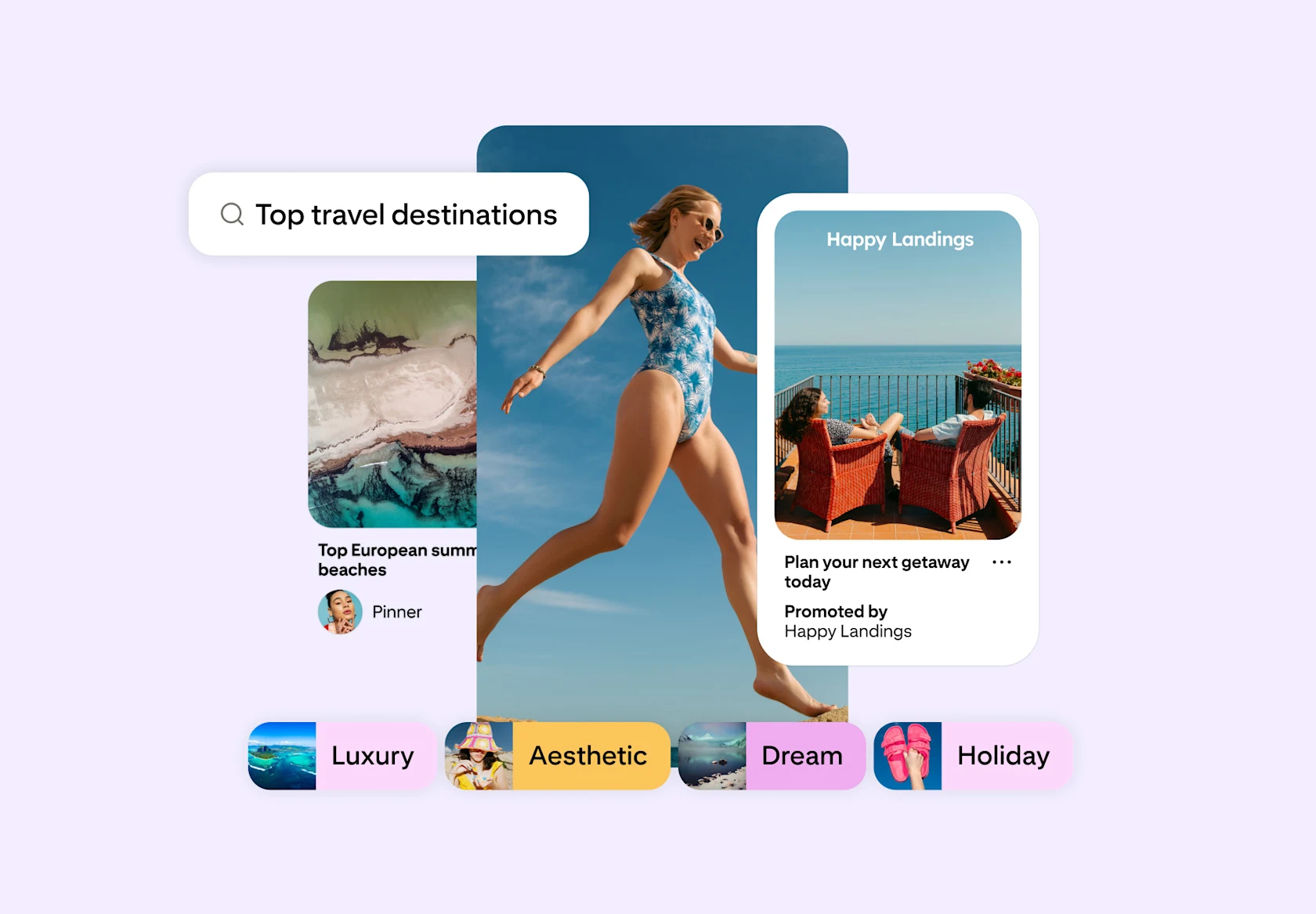
Own the moment: Secure Premiere Spotlight—Pinterest’s most prominent placement—to take over home and search feeds during peak planning surges. Pair it with editorial sponsorship and “Brought to you by [your brand]” positioning to elevate your storytelling around key seasonal and cultural moments.
Measure what matters: Don’t just chase last-click results; track the signals that show where the journey begins. Saves, clicks and board creations reveal tomorrow’s bookings.
Go full-funnel: Tailor creative to each stage of the journey and retarget people who engage. On Pinterest, 55% of travel searches have been shown to lead to Pin closeups and 7% to outbound clicks—clear movement down the funnel from discovery to site visit.5
Peak bookings aren’t won at checkout—they’re earned in decisive, personal moments long before. Show up early, reduce the noise and turn planners into passengers.

